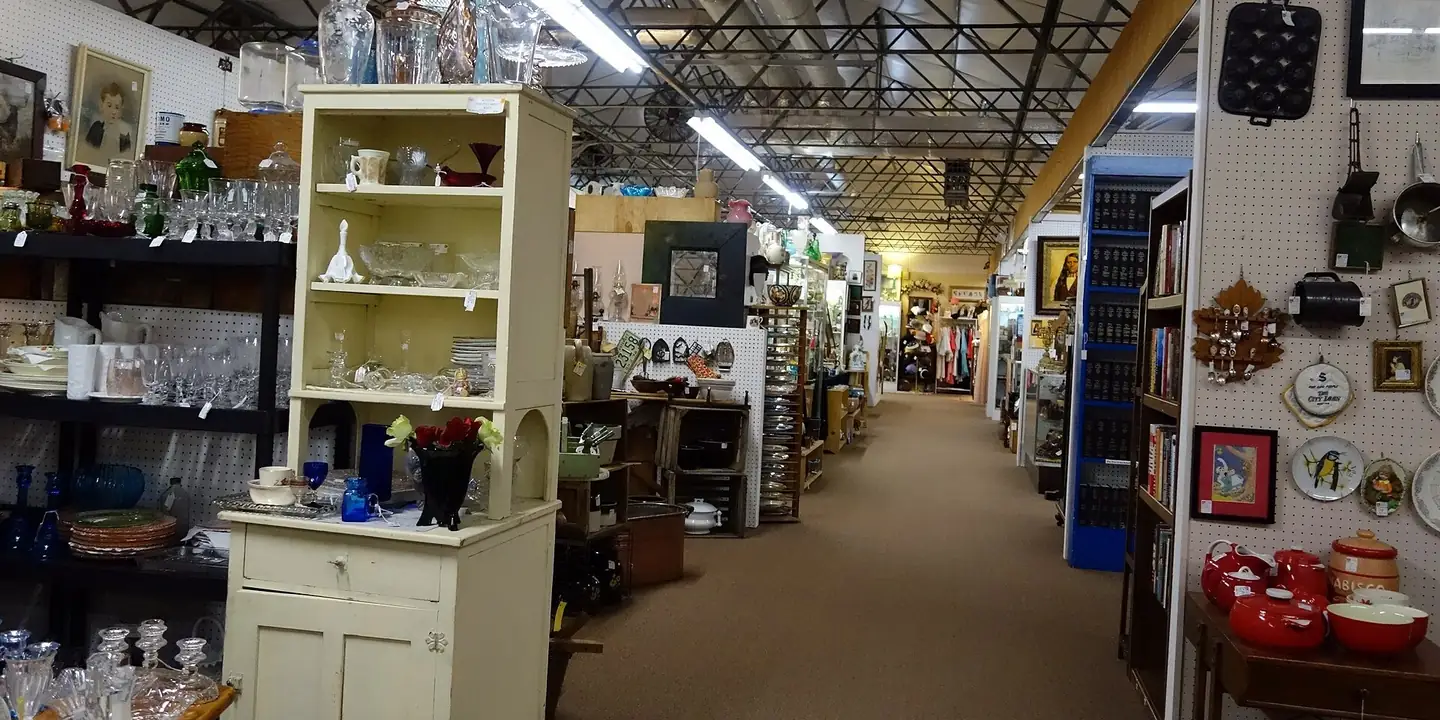

An antique mall rewards a little planning. The stock changes every week, each booth belongs to a different dealer, and the person at the register is rarely the person who priced your find. These tips come from how multi-dealer malls are set up, plus figures from our own listings where we have them.
- Before you go
- Browsing a big mall
- Asking for a better price
- Holds, payment and getting it home
- Checking what you buy
- Comfort and access
Before you go
Check the hours, then call
Mall hours vary more than people expect. Of the 458 malls in our listings with hours read from their own website, 385 (84%) state that they open on Sunday, and many others close on a weekday or keep shorter winter hours. Each mall page here shows the hours we found and the date we read them. Holidays and staff shortages can change things at short notice, so call before a long drive. Our open on Sunday lists help with weekend trips, and the antique mall hours guide shows the usual times and the days malls most often close.
Allow enough time
The typical mall in our listings states about 70 dealers. A mall that size can take an hour or two at a relaxed pace. The largest malls state several hundred dealers or more than 50,000 square feet and can fill a day. If you hope to visit several malls, look for areas where malls sit close together.
Bring the right things
- A tape measure, and the measurements of the space at home where a piece would go, including doorways and stairs.
- Photos of the room, or of the set you are trying to complete (china patterns, glassware, flatware).
- Your phone, to look up maker's marks and compare prices.
- Blankets, straps or boxes if you might bring something large or fragile home.
Browsing a big mall
Pick up a floor map if the mall has one, and work aisle by aisle so you do not miss whole sections. Booths differ a lot: one dealer may sell mid-century furniture, the next vintage tools or postcards. When something interests you, note the booth number. In a large mall it is easy to lose track of where you saw it.
Small valuables such as jewelry, coins and silver are usually in locked cases. Ask the staff to open a case. They will often hold the item at the counter while you keep shopping.
Stock turns over constantly, so a mall you visited last month may look quite different now. Regular visitors often come back every few weeks for that reason.
Asking for a better price
Prices in an antique mall are set by each dealer, and the counter staff usually cannot change them on their own. A few habits help:
- Read the tag first. Some dealers mark a price as firm. Others note that offers are welcome, or that a discount is already allowed.
- Ask at the counter politely. Many malls let dealers set a standing discount that staff can apply, often a modest one, or will phone the dealer with your offer. Expect a small reduction on most items, if any, rather than a big one.
- Make a reasonable offer. Several items from the same booth give a dealer more reason to say yes.
- Be ready to wait. If the dealer cannot be reached, staff may take your number and call you back.
Holds, payment and getting it home
Most malls take cards, though policies vary. Some offer layaway or hold an item for a day or two with a deposit. Ask before you leave the building, not after. For furniture, ask whether the mall has staff who can help carry it to your car, whether you can pay now and collect later, and whether they can recommend a local delivery service. Sales are often final, so ask about the return policy before you pay.
Checking what you buy
Booths are rarely staffed, so do your own inspection. Open drawers and doors on furniture, look underneath for repairs or replaced parts, and check that tables and chairs stand level. Hold glass and china up to the light to spot chips and cracks. Look for maker's marks on the base of pottery and on the back of silver, and remember that marks can be copied.
Reproductions are common in some categories, such as cast-iron banks, advertising signs and some glassware. A price far below what similar pieces sell for, artificial-looking wear, or very sharp castings can all be warning signs. If a piece matters to you, ask the staff whether the dealer can tell you more about it before you buy. Our guide to antique, vintage and collectible labels explains what the words on a tag usually mean.
Comfort and access
Large malls mean a lot of walking on hard floors. Wear comfortable shoes, take breaks, and keep water with you. Some older buildings have more than one floor, narrow aisles or steps between rooms. We do not record accessibility, seating, restrooms or parking in our listings, so if any of these matter to you, call the mall before you go.
Find a mall for your next trip: antique malls by state, or search near you.